
Issue 03 | October 22, 2026
WHY ALASKA?
Understanding Alaska’s mineral potential and what it means for the Whistler Gold-Copper Project
A STRONG MINERAL ENDOWMENT
Alaska has a long history of mineral exploration and production, supported by a diverse geological endowment and an established mining industry. The first gold rush dates back to gold strikes in Nome (1898) and Fairbanks (1902). In 2025, the State produced approximately US$6.5 billion in metals, accounting for about 5.73% of total U.S. metal production1. According to the U.S. Geological Survey (USGS), operating mines across Alaska produce gold, zinc, silver, lead and other metals, demonstrating the state’s established role in North American mineral supply.
Home to a number of large gold and copper deposits, Alaska is widely regarded as highly prospective for new discoveries, yet remains underexplored due to its vast scale and glacial cover. In the 2025 Fraser Institute survey2, Alaska ranked 10th (out of 41 jurisdictions globally) in the ‘Mineral Potential Index’ and 12th globally in the ‘Investment Attractiveness Index’. Among U.S. mining jurisdictions, Alaska ranked 3rd on both indices.
AN ESTABLISHED MINING LANDSCAPE
Alaska is home to several significant operating mines, including Fort Knox, Pogo and Kensington, which produce gold, and Red Dog, one of the world’s largest zinc mines. Greens Creek is a major U.S. silver producer that also yields gold, zinc, lead and copper. Together, these operations highlight Alaska’s established tier-one operational landscape.
Alaska also hosts a significant number of exploration and development projects containing gold, copper, base metals, and critical minerals including antimony, graphite, tungsten and rare earth elements. According to the State Department of Natural Resources3, Alaska has known occurrences of 51 of the 54 critical minerals identified by the U.S. Geological Survey.
This domestic supply potential is clearly a priority for the White House; President Trump issued an Executive Order on Day 1 of his presidency titled ‘Unleashing Alaska's Extraordinary Resource Potential’.
1 U.S. Geological Survey (USGS) 2026 Mineral Commodity Summaries.
2Fraser Institute Annual Survey of Mining Companies, 2025. Authors Julio Mejía and Elmira Aliakbari, Fraser Institute, February 2026.
3www.dggs.alaska.gov/pubs/minerals
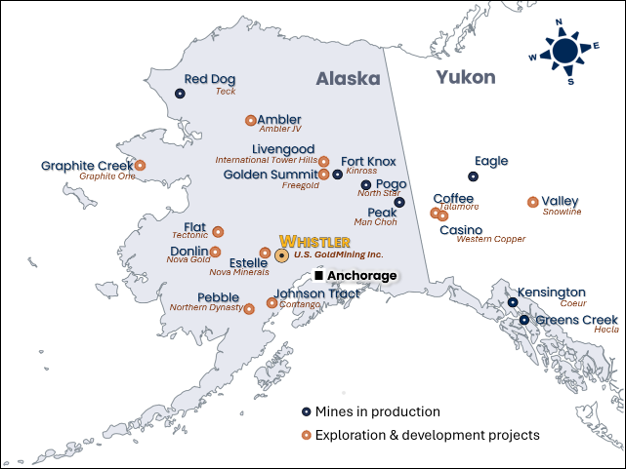
Figure 1 Alaska producing mines, and exploration and development projects.
WHY ALASKA MATTERS FOR WHISTLER
U.S. GoldMining’s 100%-owned Whistler Gold-Copper Project is located approximately 105 miles (170 km) northwest of Anchorage, within the emerging West Susitna Mineral District. The ‘West Su’ has significant exploration potential for additional porphyry and intrusion-related gold systems, in addition to critical minerals such as copper, silver and antimony, and energy resources including natural gas and coal.
The Project covers approximately 53,700 acres of mining claims located 100% on State land and hosts three gold-copper-silver mineral systems: Whistler-Raintree, Island Mountain and Muddy Creek. Each contains multiple exploration targets for potential discovery of additional mineralization. Within the Whistler-Raintree area alone, more than 25 additional exploration targets have been identified, warranting further investigation.
Permitting Advantage: The Whistler Project is permitted for exploration and has undergone initial environmental baseline work. Being located entirely on State lands means exploration permitting is primarily administered by the State of Alaska, which the Company believes streamlines the process compared to federal lands, although certain federal permits may still be required.
PEA Base Case: In March 2026, U.S. GoldMining released an Initial Assessment that included a Preliminary Economic Assessment (the “PEA”)4. The base case under the PEA provides a framework for evaluating potential next steps, including further technical engineering work and continued exploration across the broader property.
WHISTLER GOLD-COPPER PROJECT AT A GLANCE
| 5.41 Moz AuEq5 Indicated Resources |
4.97 Moz AuEq5 Inferred Resources |
| US$2.04B NPV5% After-tax PEA NPV (consensus base case) |
33.0% IRR After-tax PEA IRR (consensus base case) |
| 53,700 Acres District-scale land package |
3 Deposits Whistler, Raintree West & Island Mountain |
| 25+ Targets Within the Whistler-Raintree area |
Gold + Copper Large-scale mineral system |
PEA notes4: Consensus metal price inputs: $3,200/oz Au, $4.50/lb Cu, $37.50/oz Ag. Spot metal price inputs: $5,000/oz Au, $5.85/lb Cu, $70/oz Ag. Refer to press release dated March 2, 2026 and the reports titled “Whistler Gold-Copper Project, S-K 1300 Technical Report Summary and Initial Assessment with Economic Analysis, Alaska, United States of America”, dated effective March 2, 2026, which is available under the Company’s profile at www.sec.gov and the 43-101 Report titled “Whistler Gold-Copper Project, NI 43-101 Technical Report and Preliminary Economic Assessment”, dated effective March 2, 2026, available under its profile at www.sedarplus.ca.
Mineral resource estimate note5: AuEq = ‘Gold Equivalent’ which comprises gold + copper + silver combined and expressed as gold grams per tonne. The gold equivalent equation is AuEq=Au + Cu*0.9361 + 0.0055Ag. Metallurgical recoveries are assumed at 100% for the purpose of conceptual equivalence; actual recoveries may be lower.
The PEA is preliminary in nature and there is no certainty that the results of the PEA will be realized. Mineral resources that are not mineral reserves do not have demonstrated economic viability.
Explore the Whistler Gold-Copper Project →
CONNECTIVITY AND FUTURE DEVELOPMENT
Transportation infrastructure is an important consideration for mineral development in remote regions. However, Whistler’s relatively close proximity to the major population center of Anchorage is a significant advantage for the Whistler Project.
The proposed West Susitna Access Project ("WSAP") is a state-led initiative to develop a public-private access road connecting the West Susitna region to existing transportation infrastructure around Anchorage. The proposed route will provide overland access to Whistler and other resource development projects in the district.
For more information: Read the September 2, 2026 news release for more details on the West Susitna Access Project →
We look forward to providing further insight into the WSAP in an upcoming newsletter.
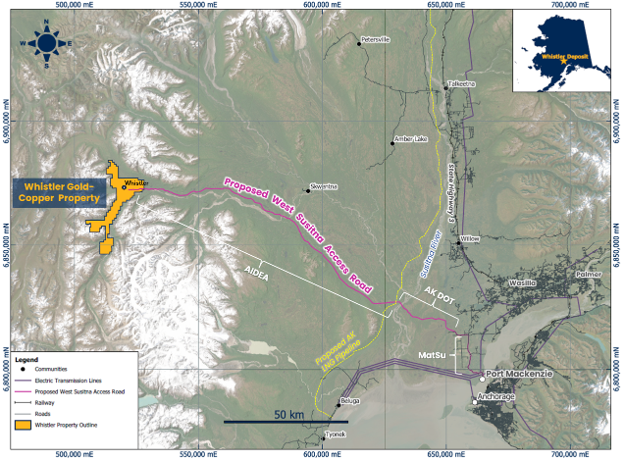
Figure 2 South Central Alaska and the West Susitna Access Project
LOOKING AHEAD
Alaska combines an established mining industry with significant geological potential occurring within large mineral districts that remain underexplored. State-led infrastructure initiatives and growing attention to domestic mineral supply chains provide important context for future resource development.
Within this setting, Whistler offers a substantial gold-copper resource base across multiple deposits, and additional exploration targets across a large land package. U.S. GoldMining continues to evaluate the project’s district-scale potential as active exploration and technical studies advance.
For further information, including regarding the mineral resource estimates and PEA referenced herein, please refer to the S-K 1300 technical report summary titled “Whistler Gold-Copper Project, S-K 1300 Technical Report Summary and Initial Assessment with Economic Analysis, Alaska, United States of America”, dated effective March 2, 2026, which is available under the Company’s profile at www.sec.gov and the Canadian National Instrument 43-101 ("NI 43-101") technical report titled “Whistler Gold-Copper Project, NI 43-101 Technical Report and Preliminary Economic Assessment”, dated effective March 2, 2026, available under its profile at www.sedarplus.ca.
References to third-party projects are for information purposes only. U.S. GoldMining has no interest in these properties, and mineralization on these or other properties is not necessarily indicative of mineralization at the Whistler Project.
FROM THE ARCHIVE
Explore previous issues of The Orbit on the U.S. GoldMining website.
MORE FROM U.S. GOLDMINING
View our Corporate Presentation →
Whistler Gold-Copper Project →
Whistler PEA Technical Report →
TECHNICAL INFORMATION
Tim Smith, P.Geo., Chief Executive Officer of the Company, has supervised the preparation of this newsletter and has reviewed the additional scientific and technical information contained herein. Mr. Smith is a qualified person as defined under NI 43-101 and S-K 1300.
FORWARD-LOOKING STATEMENTS
Certain of the information contained in this newsletter constitutes "forward-looking information" and "forward-looking statements" within the meaning of applicable United States federal securities laws and Canadian securities laws ("forward-looking statements"), which involve known and unknown risks, uncertainties and other factors that may cause the Company's actual results, performance and achievements to be materially different from the results, performance or achievements expressed or implied therein. Forward-looking statements, which are all statements other than statements of historical fact, include, but are not limited to, resource estimates, the results of the PEA, the potential to identify resource extensions or new mineralization, the potential development and timing of the West Susitna Access Project, the effect of government policy on domestic mineral development, and the Company's plans and expectations regarding the Whistler Project and future opportunities and proposed work and studies thereon. Words such as “expects”, “anticipates”, “plans”, “estimates”, “potential” and “intends” or similar expressions are intended to identify forward-looking statements. Forward-looking statements are based on U.S. GoldMining’s current expectations, beliefs, assumptions, estimates and forecasts about the business and the markets in which it operates, including assumptions regarding commodity prices, the availability of financing, personnel and equipment, the development of infrastructure, and the receipt of required permits. Risks and other factors that could cause actual results to differ materially include, among others, fluctuating commodity prices, risks inherent with preliminary economic assessments and mineral resource estimation generally, economic risks, changing economic factors, variations in the underlying assumptions associated with the estimation or realization of mineral resources, the availability of capital to fund programs and future development work, the risk that the West Susitna Access Project is delayed, modified or not completed, changes in government policy, accidents, labor disputes and other risks of the mining industry (including those associated with the environment), delays in obtaining governmental approvals or permits, title disputes, other risks inherent in the exploration and development of mineral properties, and the other risk factors set forth in the Company’s Annual Report on Form 10-K and other filings with the U.S. Securities and Exchange Commission at www.sec.gov and the Canadian Securities Administrators at www.sedarplus.ca. Although the Company has attempted to identify important factors that could cause actual results, performance or achievements to differ materially from those described in forward-looking statements, there may be other factors that cause results not to be as anticipated, estimated or intended. Accordingly, readers should not place undue reliance on forward-looking statements. There can be no assurance that forward-looking statements, or the material factors or assumptions used to develop them, will prove to be accurate. The Company does not undertake any duty to update any forward-looking statements, except as required under applicable securities laws.